quinta-feira, 21 de fevereiro de 2008

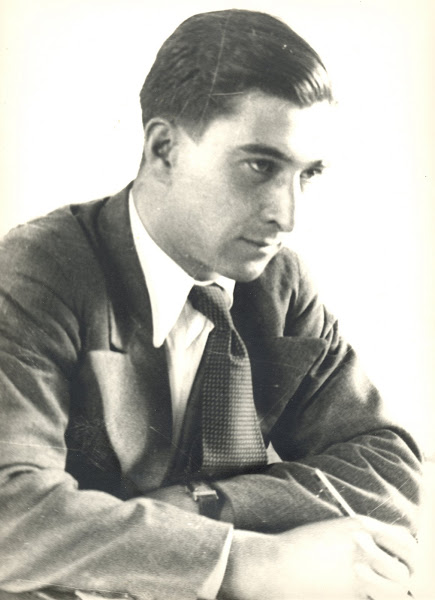
Paul Cézanne (1839 - 1906)


Entre outros, influenciou o nosso Arlindo Vicente.

Viagem de Sinbad

When it was the Five Hundred and Thirty-ninth Night,
She said, It hath reached me, O auspicious King, that when the ship-master cried to the passengers, "Leave your gear and seek safety, ere ye die;" all who heard him left gear and goods, clothes washed and unwashed, fire pots and brass cooking-pots, and fled back to the ship for their lives, and some reached it while others (amongst whom was I) did not, for suddenly the island shook and sank into the abysses of the deep, with all that were thereon, and the dashing sea surged over it with clashing waves. I sank with the others down, down into the deep, but Almighty Allah preserved me from drowning and threw in my way a great wooden tub of those that had served the ship's company for tubbing. I gripped it for the sweetness of life and, bestriding it like one riding, paddled with my feet like oars, whilst the waves tossed me as in sport right and left. Meanwhile the captain made sail and departed with those who had reached the ship, regardless of the drowning and the drowned; and I ceased not following the vessel with my eyes, till she was hid from sight and I made sure of death. Darkness closed in upon me while in this plight and the winds and waves bore me on all that night and the next day, till the tub brought to with me under the lee of a lofty island, with trees overhanging the tide. I caught hold of a branch and by its aid clambered up on to the land, after coming nigh upon death; but when I reached the shore, I found my legs cramped and numbed and my feet bore traces of the nibbling of fish upon their soles; withal I had felt nothing for excess of anguish and fatigue. I threw myself down on the island ground, like a dead man, and drowned in desolation swooned away, nor did I return to my senses till next morning, when the sun rose and revived me. But I found my feet swollen, so made shift to move by shuffling on my breech and crawling on my knees, for in that island were found store of fruits and springs of sweet water. I ate of the fruits which strengthened me; and thus I abode days and nights, till my life seemed to return and my spirits began to revive and I was better able to move about. So, after due consideration, I fell to exploring the island and diverting myself with gazing upon all things that Allah Almighty had created there; and rested under the trees from one of which I cut me a staff to lean upon. One day as I walked along the marge, I caught sight of some object in the distance and thought it a wild beast or one of the monster-creatures of the sea; but, as I drew near it, looking hard the while, I saw that it was a noble mare, tethered on the beach. Presently I went up to her, but she cried out against me with a great cry, so that I trembled for fear and turned to go away, when there came forth a man from under the earth and followed me, crying out and saying, "Who and whence art thou, and what caused thee to come hither?" "O my lord," answered I, "I am in very sooth, a waif, a stranger, and was left to drown with sundry others by the ship we voyaged in but Allah graciously sent me a wooden tub; so I saved myself thereon and it floated with me, till the waves cast me up on this island." When he heard this, he took my hand and saying, "Come with me," carried me into a great Sardab, or underground chamber, which was spacious as a saloon. He made me sit down at its upper end; then he brought me somewhat of food and, being anhungered, I ate till I was satisfied and refreshed; and when he had put me at mine ease he questioned me of myself, and I told him all that had befallen me from first to last; and, as he wondered at my adventure, I said, "By Allah, O my lord, excuse me; I have told thee the truth of my case and the accident which betided me; and now I desire that thou tell me who thou art and why thou abidest here under the earth and why thou hast tethered yonder mare on the brink of the sea." Answered he, "Know, that I am one of the several who are stationed in different parts of this island, and we are of the grooms of King Mihrjan and under our hand are all his horses. Every month, about new-moon tide we bring hither our best mares which have never been covered, and picket them on the sea-shore and hide ourselves in this place under the ground, so that none may espy us. Presently, the stallions of the sea scent the mares and come up out of the water and seeing no one, leap the mares and do their will of them. When they have covered them, they try to drag them away with them, but cannot, by reason of the leg-ropes; so they cry out at them and butt at them and kick them, which we hearing, know that the stallions have dismounted; so we run out and shout at them, whereupon they are startled and return in fear to the sea. Then the mares conceive by them and bear colts and fillies worth a mint of money, nor is their like to be found on earth's face. This is the time of the coming forth of the sea-stallions; and Inshallah! I will bear thee to King Mihrjan" --And Shahrazad perceived the dawn of day and ceased to say her permitted say.

quarta-feira, 13 de fevereiro de 2008

O ensino da música


Será que a ministra não gosta de música?

quarta-feira, 30 de janeiro de 2008

sábado, 26 de janeiro de 2008

A coisa está feia

Hoje rapidamente

O Marinho Pinto, bastonário da Ordem dos Advogados, diz que há pessoas corruptas em altos cargos. Vão-lhe cair em cima. Aliás, parece que já estão

Os palestinianos estão a fugir em massa de Gaza. Dentro em breve Israel poderá anexar o território à vontade.

O nosso Governo agravou as condições para os detentores de certificados de aforro. A banca privada agradece.

Os serviços de urgência vão de mal a pior. As famosas reformas do Correia de Campos estão a dar mau resultado.

segunda-feira, 21 de janeiro de 2008

Meyrink. Der Cardinal Napellus

Li, numa edição da Editorial Presença, colecção A Biblioteca de Babel, Der Cardinal Napellus, de Gustav Meyrink. Foi no domingo, dia 20 de Janeiro, no combóio do Porto para Vila Franca de Xira. A tradução é de Maria Jorge Vilar de Figueiredo.

A Biblioteca de Babel é uma colecção de literatura fantástica dirigida por Jorge Luis Borges. Foi editada por Franco Maria Ricci. Jorge Luís Borges seleccionou e prefaciou as trinta obras incluídas nesta colecção.

Gustav Meyer, que alterou o seu apelido para Meyrink, nasceu em Viena em 1868. Morreu em Starnberg, na Baviera, em 1932. A sua obra mais famosa foi Der Golem. Der Cardinal Napellus inclui mais dois contos, J. H. Obereit Besuch bei den Zeitengeln e Die vier Mondbruder.

Na introdução, Borges diz que Meyrink acreditava que o reino dos mortos penetrava no mundo dos vivos e que o nosso mundo visível era incessantemente invadido pelo outro mundo, invisível.

Isto vai de mal a pior

Cheguei hoje do Porto, e estive a tentar pôr a leitura dos jornais em dia, e a ver televisão. Três coisas chamaram-me a atenção:
A situação na Saúde. Continuam os encerramentos, seguidos de protestos. É flagrante a intenção de fechar os serviços públicos para abrir caminho aos privados. Já assinei a petição do BE, no blogue do Daniel Oliveira, Arrastão. http://arrastao.org
Apesar de ter sido eleita a nova direcção, continua-se a falar do BCP. O Vítor Constâncio foi chamado à AR, e parece que dá justificações muito insuficientes sobre porque só agora se começou a interessar pelo que se passa lá no BCP. Entretanto o Paulo Teixeira Pinto recebeu uma indemnização monstruosa e uma bruta pensão por ter despedido, ao que diz o Público de sexta-feira passada, dia 18. Parece que já veio desmentir, mas o Público alega ter razão.
Israel está a dar cabo de Gaza em particular e dos palestinianos em geral. Alega que é para se defender, mas só quem não quer ver é que não percebe que estão a querer obrigar os palestinianos a abandonar o país. É evidente tratar-se de genocídio.


Conclusão: isto está muito feio.

sábado, 12 de janeiro de 2008

Edgar Allan Poe - 1809 - 1949 - Annabel Lee

 It was many and many a year ago,
   In a kingdom by the sea,
That a maiden there lived whom you may know
   By the name of ANNABEL LEE;--
And this maiden she lived with no other thought
   Than to love and be loved by me.
She was a child and I was a child,
   In this kingdom by the sea,
But we loved with a love that was more than love--
   I and my Annabel Lee--
With a love that the winged seraphs of heaven
   Coveted her and me.

And this was the reason that, long ago,
   In this kingdom by the sea,
A wind blew out of a cloud by night
   Chilling my Annabel Lee;
So that her high-born kinsman came
   And bore her away from me,
To shut her up in a sepulchre
   In this kingdom by the sea.

The angels, not half so happy in Heaven,
   Went envying her and me:--
Yes! that was the reason (as all men know,
   In this kingdom by the sea)
That the wind came out of a cloud, chilling
   And killing my Annabel Lee.

But our love it was stronger by far than the love
   Of those who were older than we--
   Of many far wiser than we-
And neither the angels in Heaven above,
   Nor the demons down under the sea,
Can ever dissever my soul from the soul
   Of the beautiful Annabel Lee:--

For the moon never beams without bringing me dreams
   Of the beautiful Annabel Lee;
And the stars never rise but I see the bright eyes
   Of the beautiful Annabel Lee;
And so, all the night-tide, I lie down by the side
Of my darling, my darling, my life and my bride,
   In her sepulchre there by the sea--
   In her tomb by the side of the sea.

sexta-feira, 11 de janeiro de 2008

João Cabral de Melo Neto (1920 - 1999)

De A Psicologia da Composição (1946-47):

...

É mineral o papel
onde escrever
o verso; o verso
que é possível não fazer.

São minerais
as flores e as plantas,
as frutas, os bichos
quando em estado de palavra.

É mineral
a linha do horizonte,
nossos nomes, essas coisas
feitas de palavras.

É mineral, por fim,
qualquer livro:
que é mineral a palavra
escrita, a fria natureza

da palavra escrita.

...


Com cumprimentos a Luiz Alberto Machado, do Sobresites

quinta-feira, 3 de janeiro de 2008

O BCP

A questão do BCP tem dominado a vida nacional. É claro que os prejuízos causados pelos conflitos entre os cavalheiros que campeiam naquela instituição vão ser pagos por todos nós, Entretanto, uma das tretas que nos querem fazer engolir é de que a crise causada por aqueles conflitos deriva da intromissão do Estado. Contudo uma leitura superficial dos jornais revela que muitas coisas falharam e, entre elas, a actuação adequada do órgão fiscalizador, o Banco de Portugal.
Na realidade, e ao contrário da citada treta, mais uma vez se desvela o peso que os lobbies privados têm no país. São eles que controlam o Estado, e não o Estado que os controla a eles. Veja-se o número de ex-governantes e de altos funcionários que cirandam pelas listas candidatas. E destaca-se entre eles Miguel Cadilhe, ex - Ministro das Finanças de Cavaco Silva. Na sua lista aparece também Bagão Félix, com grande currículo governamental. Na outra, a acompanhar Santos Ferreira aparece Armando Vara, veterano da banca e de lugares públicos. Bom, vão-me dizer, tu tens é inveja.
Afianço que não tenho inveja. E que acho que esta Nomenklatura (não era uma coisa destas que se dizia que existia na União Soviética?) defende os tais lobbies privados (dos quais são membros destacados) e não o Estado, ou os portugueses. Passeiam-se para cá e para lá, e nós a vê-los. Com inveja, claro, dirão. Hoje, o prestimoso José Manuel Fernandes, no seu editorial no Público, diz que "o mais valioso capital social de uma comunidade está para além das leis, está nas regras de comportamento não escritas que tornam insuportável aos seus membros conviver com o excesso de injustiça. Ou ser parte dessa injustiça." Está ele com receio de que apareçam leis a controlar a Nomenklatura?

Sinbad o Marinheiro - Primeira Viagem

First Voyage of Sindbad the Seaman.

"My father was a merchant, one of the notables of my native place, a monied man and ample of means, who died whilst I was yet a child, leaving me much wealth in money and lands and farmhouses. When I grew up, I laid hands on the whole and ate of the best and drank freely and wore rich clothes and lived lavishly, companioning and consorting with youths of my own age, and considering that this course of life would continue for ever and ken no change. Thus did I for a long time, but at last I awoke from my heedlessness and, returning to my senses, I found my wealth had become unwealth and my condition ill-conditioned and all I once hent had left my hand. And recovering my reason I was stricken with dismay and confusion and bethought me of a saying of our lord Solomon, son of David (on whom be peace!), which I had heard aforetime from my father, "Three things are better than other three; the day of death is better than the day of birth, a live dog is better than a dead lion and the grave is better than want." Then I got together my remains of estates and property and sold all, even my clothes, for three thousand dirhams, with which I resolved to travel to foreign parts, remembering the saying of the poet, "By means of toil man shall scale the height; * Who to fame aspires mustn't sleep o' night:Who seeketh pearl in the deep must dive, * Winning weal and wealth by his main and might:And who seeketh Fame without toil and strife * Th' impossible seeketh and wasteth life."So taking heart I bought me goods, merchandise and all needed for a voyage and, impatient to be at sea, I embarked, with a company of merchants, on board a ship bound for Bassorah. There we again embarked and sailed many days and nights, and we passed from isle to isle and sea to sea and shore to shore, buying and selling and bartering everywhere the ship touched, and continued our course till we came to an island as it were a garth of the gardens of Paradise. Here the captain cast anchor and making fast to the shore, put out the landing planks. So all on board landed and made furnaces and lighting fires therein, busied themselves in various ways, some cooking and some washing, whilst other some walked about the island for solace, and the crew fell to eating and drinking and playing and sporting. I was one of the walkers but, as we were thus engaged, behold the master who was standing on the gunwale cried out to us at the top of his voice, saying, "Ho there! passengers, run for your lives and hasten back to the ship and leave your gear and save yourselves from destruction, Allah preserve you! For this island whereon ye stand is no true island, but a great fish stationary a-middlemost of the sea, whereon the sand hath settled and trees have sprung up of old time, so that it is become like unto an island; but, when ye lighted fires on it, it felt the heat and moved; and in a moment it will sink with you into the sea and ye will all be drowned. So leave your gear and seek your safety ere ye die!"--And Shahrazad perceived the dawn of day and ceased saying her permitted say.

segunda-feira, 31 de dezembro de 2007

Charlie Chaplin - Monsieur Verdoux

Ontem à noite (sábado, dia 29, para domingo, dia 30) vi na RTP 2, Monsieur Verdoux. Trata-se de um filme de Charlie Chaplin, realizado em 1947. O argumento original era de Orson Wells, depois Chaplin adquiriu-o e adaptou-o. A história inspira-se na vida do criminoso francês Landru, serial killer executado em 1922, acusado do assassinato de onze pessoas. Parece que este se dedicava a seduzir e matar mulheres sós, para as roubar. Usava o produto do roubo para sustentar a sua família, mulher e quatro filhos.

Chaplin procura integrar o criminoso no ambiente da época, de grande crise económica, em que as pessoas eram obrigadas para viverem a lançar mão de toda a espécie de recursos, muitas vezes à margem da moral e das leis. A concorrência feroz, a falta de escrúpulos na política e nos negócios, a coexistência de um luxo chocante e de uma pobreza crudelíssima e sem esperança, levam Mr. Verdoux, bancário lançado no desemprego e no desespero ao fim de 37 anos de trabalho, a procurar no roubo e no assassínio o sustento da mulher inválida e do filho pequeno.
Do que conheço da obra de Chaplin este filme constitue talvez o que melhor traduz o seu pensamento sobre a sociedade contemporânea. Pessoalmente sempre tive dificuldade em apreciar Chaplin, talvez porque sempre o achei de uma tristeza espantosa. Nunca consegui rir com os seus filmes, sem dúvida que por deficiência minha. Mas em Monsieur Verdoux encontrei uma explicação: as graças, os finais felizes que constantemente se encontram nos outros filmes, destinaram-se a amenizar uma visão profunda (e julgo que correcta) do que é a vida na sociedade moderna. A ferocidade do comportamento do personagem, os gagues utilizados para satirizar os vários tipos sociais, caricaturizam os valores dominantes, que a hipocrisia oficial mascara muito mal. Julgo tratar-se efectivamente do auge da obra de Chaplin, e que é este filme que está na origem de ter de se exilar de Hollywood e dos EUA.